

Finally catching my blog up…. Here’s last year’s round of May on the Move, THE annual writing initiative created by Catriona Turner on Instagram
Prompt: (Re)Introduce yourself!
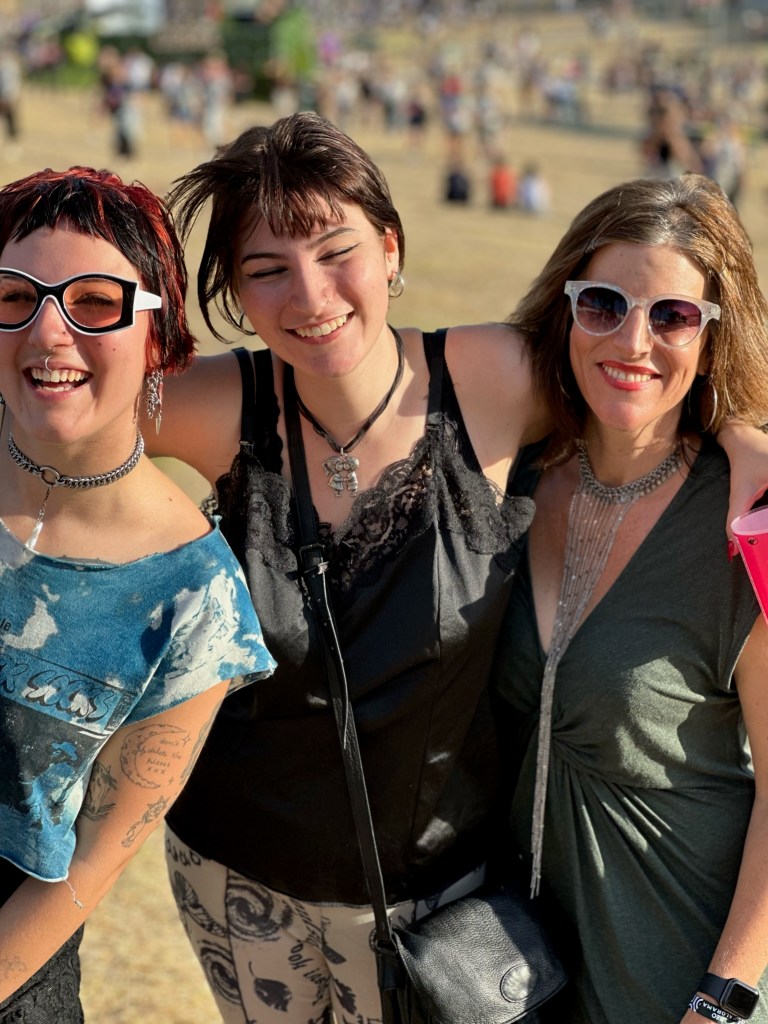
Hi, I’m Steph! 👋🏻
Reintroducing myself on #mayonthemove2024.
I was born and raised in Bavaria 🇩🇪, moved to 🇬🇧 in my twenties, and then to 🇺🇸 in my thirties with my husband and our two children. We started near San Francisco, CA, then moved to Austin, TX, and for the last two years, we’ve been based in New Jersey, just outside of NYC.
I love learning and have a hard time deciding what I want to do when I grow up.
My favourite outdoor activities are walking my dog, hiking, snowboarding and horse riding, even though I hardly get to practice those last two these days. Nature is my refuge.
My favourite indoor activities are knitting and crocheting, baking, yoga, reading and going to the cinema. I used to prefer books to movies, but a good film wins hands down.
I’m a cat person 🐈 🐈⬛ but I love my dog Bowie 🐕
I used to write a blog and am currently attempting to create a memoir. You can find my writing on my website, Transcontinental Overload, and on Medium (Links in Bio).
I’m a little awkward, and never know when it’s time to talk or to stop talking (!), which has made podcasting challenging at times! However, I recently found out that I am neurodivergent, and so I’ve learned to be less hard on myself and to embrace my inner oddball.
I’m an extremely loyal friend, and am really proud of the fact that I’ve maintained some longtime friendships over the years and distances.
I’m not good at maths, chores and things like making phone calls or following instruction manuals and maps. I can, however, write a poem on the spot or bake an elaborate cake without a recipe.

Prompt: How do you connect with your inner child or inner wisdom? What lights you up?
To be perfectly honest, I’m not sure I could have answered this a couple of years ago! But since then, I’ve been on a very intensive and more spiritual inner journey, learning all about inner child healing, and now I’m happy to give it a shot:
I actually have lots of conversations with my inner children, at least once a day. I think I’m not just one person who changes over time, I think I’m a nesting doll – from the outside, I might look like a 50-year-old woman, but I also carry my 8-year-old self, and my 21-year-old self, and my 35-year-old self inside of me (along with all the other sisters) and I find that perspective hugely reassuring.
I can say things to my inner children that I might have needed to hear but didn’t when I was younger, words of affirmation and validation instead of criticism.
Not only do I have conversations with my inner children, but I also perform actions for them. Things I might not have been brave enough to do, or things that I would have loved to be told when I was younger. 20-year-old me, for example, was really intrigued by getting a tattoo but would have never been bold enough to actually go through with it, so when I got tattoed in my 40s, I did it partly to appease that timid young girl. I could certainly feel her doing a happy somersault inside of me we were finished!
I can’t wait to see what 70-year-old me has in store for her inner 50-year-old….
What lights me up is seeing my children say or do things that I didn’t feel brave enough for when I was their age. When my 21-year old is singing on stage with their band, 21-year-old self-conscious inner me is losing it and screaming along with joy, and when my 17-year-old calmly squares up to an authority figure and explains why they disagree with them, my shy inner 17-year-old proudly applauds their confidence.
Prompt: Language – What does your accent say about you?
Oh I love accents! I grew up in a family where we would put on accents for fun all the time, and I loved the playfulness and then later the subtleties of what different accents convey.
We didn’t speak Bavarian dialect at home, although I can understand and speak it, and I do believe that when I speak standard German (Hochdeutsch), there’s usually a slight Southern twang to my pronunciation, unless I make an effort to mask it, for example when I’m with “Northerners”. Some people have very strong regional accents and they will have them regardless of what environment they’re in, even when they speak another language. I’m not one of them.
Both in German and in English, I have what could be called a “wandering accent”. I tend to try and adapt to the local accent, which I thought was because I was so desperate to fit into whatever environment I lived in, as an innate people pleaser (maybe you’ve heard the term “people pleaser accent”). Apparently that’s not the only explanation. Being able to imitate accents or change your way of speaking depending on your environment is also a sign of a high-musicality brain, and it’s a sign of high empathy – wanting to express one’s subconscious desire to feel empathy with a person. I definitely prefer this way of looking at it!! It’s also called “chameleon effect”, and mirroring other people’s accent, tone of voice etc is very common among autistic people.
My accent journey in English has been a curious one. When I studied English to become a translator, I was of course introduced to “both” accents (“both” being an utterly ridiculous concept when you think about the huge diversity of English accents). Moving to England was eye-opening, and I was definitely not prepared for the Cockney/Estuary twang I encountered in the South East, nor the Scottish tones when I had to make a phone call to a bank. I fought hard to eradicate any trace of my German accent because I hated being asked where I was from, and I hated the sound of it. I actually succeeded to the point where people really couldn’t tell where I was from.
I never mastered the local twang completely, so it was obvious I wasn’t from there, but neither did my Teutonic roots shine through.
And then I moved to the US, and everything fell apart. At the beginning, I got the typical “Oh my gosh your accent is so cute” comments, and I totally milked it when it came to giving presentations or reading stories to my kids’ elementary school friends in class. But over the years, my subconscious urge to adapt grew stronger, and my “British” accent became weaker. This resulted in a curious mix, depending on the company I was in. I’ve been asked if I was Irish (probably when I was trying to sound more “American”), South African (probably when my German accent came through) and Australian (probably when I was most relaxed and mixed everything up). The thing is, if you’d put me next to an Irish, South African or Australian person, you would not hear any commonality, but people need boxes to put you in.
These days, my English is a total mix of all the places I’ve lived in, and I love that because THAT IS WHO I AM. It wouldn’t make sense to be speaking in a cut-glass RP (received pronunciation) British accent when it’s not my mother tongue and I have lived in the US longer than the UK (yes, really!). Equally, why would I switch to a more definite US accent (I’m sorry, New Jersey accent, but I will never ever adopt you)?
I think I have a stronger German accent when I speak English these days, but I’m no longer embarrassed by it. I use words like “y’all”, have a more rotic “r” than in my life in the UK, I roll my “ls” more, and yet still say “daaance” and “tomaaaato”.
Sometimes when I’m feeling playful and “actor-y” and am in an environment like Starbucks or Target, I’ll go “full American” and get a kick out of not being asked where I am from.
What’s your accent journey?
Prompt: Language – What do you gain or lose when learning and using another language?
We always talk about the benefits of learning languages – it’s an essential tool for immigration, to feel more connected to a new culture, to understand it more, and to make friends more easily, and it’s even recommended as a tool to train our brain cells to prevent dementia.
I love learning languages, and so for me, it’s always been a no-brainer to keep learning, as the benefits are too many to count. But is it all a gain, or can learning another language mean something’s gotta give? What do you lose in the process?
So here I go with my observations:
One of the things I like most about being able to speak more than one language is that I get to try out new personality traits! Yes, I do feel funnier, braver and more proactive in English compared to German. Maybe because the language is more suited to packing a lot of nuance into a few punchy words without complicated differing word endings and sentence structure. But there could be another reason.
I’ve observed that I swear more in English. This might be because when I speak in a language that isn’t my mother tongue, I can distance myself emotionally to some degree, and this emotional detachment makes me say things that I might not express in the same way in German.
I think that’s a really interesting observation. But does it mean that the feelings expressed in my non-native language are less real? This doesn’t seem to make total sense, yet I do think there’s a grain of truth in it. You could say you lose some inhibitions when speaking another language.
Research supports this, claiming that when putting bilingual adults to the test, they tend to make more rational, utilitarian and economic decisions in a second language, especially when judging risk or when faced with a moral dilemma. The reason for this, according to researchers, is reduced emotionality when speaking the foreign language as opposed to their mother tongue.
There was a study (I don’t recall the source) where several bilingual adults were asked how they would solve the following problem: A train is about to kill five people, and the only way to stop it would be to push another man in front of it. This would kill the man, but save five. Half the subjects were asked in their native language, the other half in a foreign language. And indeed, more participants selected the utilitarian choice when using the foreign language rather than their mother tongue.
Fascinating, no? After all, I feel completely “me” when I speak English, and also when I speak German. I don’t feel emotionally different. I’m the same person, and yet, maybe there is a little invisible barrier, in the way I express myself in my non-native language, and a lack, or loss, of “viscerality”.
I cried buckets once when I watched a German film, and the main character said “Ich liebe dich” to the object of his affection. It felt like a punch in the stomach. I hadn’t heard anybody say these words to me in a very long time. Because for me, saying and hearing the English “I love you” doesn’t carry the same visceral feeling, even if it comes from the bottom of my or the other person’s heart. Here in the US, you can dish out the “I love yous” quite liberally; I can say “I love you” to a friend, my children, or even my doctor or a teacher. German is not like that, oh no.
Prompt: Seasons – How do you celebrate the seasons where you live?
What have you added?
When we moved to New Jersey two years ago, one of the things I was excited about was having “proper” seasons again, as in spring, summer, autumn/fall and winter, from a Northern Hemisphere viewpoint.
Living in California and Texas for so many years meant that I was used to a very different seasonal system; in those states, “seasons” are just not as distinct, and you can have warm temperatures year-round. Which sounds quite blissful, and on those dark and cold miserable NJ nights in January I absolutely miss my California and Texas winters.
Arctic blasts in Texas took some getting used to, but they never usually last that long, and it’s totally normal to find yourself sitting in the sunshine, in a beer garden in December, wearing a t-shirt and maybe a light jacket and not ten thousand layers with your fingers freezing. It also means you need to keep your pedicure in ship shape all year! I definitely miss those warm winter days, but I do not miss the brutally hot Texas summers when you’re trapped indoors. There is a reason so many Texas houses have a garage attached so you don’t need to step outside from your car to your house.
In many ways, New Jersey feels much more like Europe, especially England, albeit with more extreme temperatures during summer and winter, and a bit less rain in general, although a lot more than in California. Spring is especially similar, with the same types of flowers and other plants growing at the same time.
The violets in spring are a match for the gorgeous English bluebells but not for Texas bluebonnets and California poppies! Vast orange fields of flowers carpet the hills of California in springtime, and bluebonnet season in Texas is truly something to behold; because you don’t have drastic changes in colour throughout the year, it’s extra special when the wildflowers explode in March and April. I smuggled bluebonnet seeds to England once and even managed to grow some in a pot, although they bloomed in June and not March, which was confusing 😀
My favourite place for summer is Germany, hands down. Mountains and lakes and beer gardens and long summer nights and seeing friends and family. There’s no contest.
Fall is pretty special in New Jersey – the foliage is spectacular, and the houses are very suited to Halloween! Too much emphasis on pumpkins for my taste, but the colours are gorgeous.
I don’t care much about Oktoberfest season, so have never missed not being in Munich at that time of year, and don’t specifically seek it out.
Thanksgiving is a new addition to our family calendar of events, and it’s a bigger celebration than Christmas here in the US, so it’s become the new holiday to kick off our Christmas season!
What have you observed about the seasons where you live?

Prompt: Seasons – How have you benefited from having relationships with people who are in a different season than you?
Most posts on this #mayonthemove2024 topic seem to talk about the benefits of relationships with people from an older season. And yes, I do have those and absolutely love our conversations and exchange of perspectives. However, I’m going to go the other direction.
Having lived in several countries, and starting from scratch each time like a wide-eyed child, has often made me appear younger than I am. I guess by jumping into a country when you’re a grown-up, you’ve missed out on so many things that the locals have experienced, and there’s a certain need to catch up. Meaning that I’ve often been keen to experience things that my peers (of the same age season) would shake their heads at. As a consequence, I have acquired a fair amount of younger friends I totally relate to! I read somewhere that neurodivergent people have delayed maturity so that could be part of the reason too….
But before said “young ones” start shouting “Shut up Grandma!”, I need to point out that more recently, I’ve thoroughly enjoyed my role as a more experienced person, sharing stories and giving advice when I’ve felt people needed a more mature, wiser, angle. Much like I’ve enjoyed and will be enjoying the perspectives of my older friends.
Prompt: Seasons – What has a season of life taught you?
I generally take a long time to process things, which means I only realise much later, with a lot of hindsight, what lessons I have learnt.
I can only hope that the latest season of my life – the expat season, which spans 14 years and two months – has prepared me for this next season of my life, the one that’s just about to unfold: the Season of Empty-Nesting.
Having brought up two international, cross-cultural and independently minded kids, nurturing both their roots and their wings, I know what’s coming is unavoidable and kind of self-inflicted. I will live thousands of miles away from both of them; there will be no weekend visits, no just popping round to take them grocery shopping, no bags of laundry and no Sunday dinners at home.
Instead: FaceTime calls at weird times, tears and worries (on both sides) that can’t be solved with a real hug, increased levels of affection for my pets, and a LOT of date nights (and spontaneous trips please), as my husband and I are reacquainting (reinventing?) ourselves as a couple.
And of course, lots of wonderful and memorable visits where I’ll totally overcompensate and annoy the hell out of my fledglings.
Without seasons, life would be very boring indeed.


Leave a comment